Dental Implants in Riga

Dental Implantation

A dental implant is a modern and safe way to fully replace a missing tooth root. It is made of biocompatible titanium, which naturally fuses with the jawbone to provide a stable foundation for the new tooth. At the AlMaDents clinic, we use world-leading implant systems and digital planning to ensure maximum precision and long-lasting results.
Make an Appointment
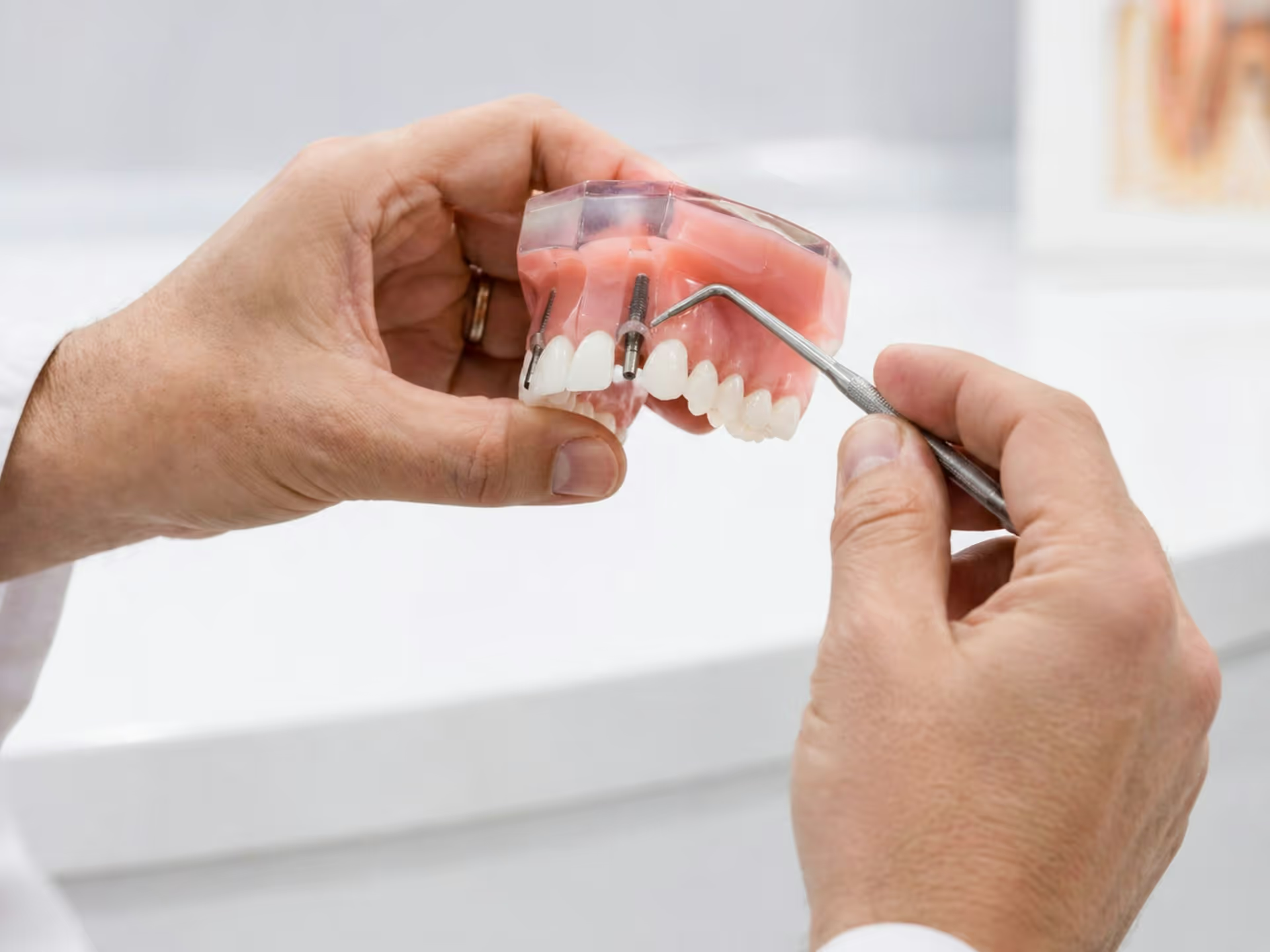
Demonstration of the dental implantation process on a jaw model at Almadents clinic
Full dental functionality
Natural aesthetics
Long-lasting solution
Preservation of adjacent teeth

Why is it important to replace missing teeth?

Stability of the dentition and correct bite

A gap in the dentition causes adjacent teeth to gradually shift, which irreversibly alters the bite. Timely restoration prevents teeth from tilting and helps maintain natural jaw function, preventing premature wear of other teeth.

Preservation of facial contours and bone protection

Lack of stimulation causes the jawbone to lose volume (atrophy), which directly impacts facial aesthetics. This can lead to premature wrinkles and a change in facial structure. Dental implants are the only solution that stimulates bone tissue, helping to prevent sagging and maintain a youthful look.

Proper nutrition and clear speech

Missing teeth make it significantly harder to chew food properly, which can lead to digestive issues. By restoring the integrity of your dentition, you regain the ability to enjoy any food without restrictions and ensure clear pronunciation, which is essential for confident everyday communication.

Psychological well-being and aesthetic confidence

Modern dental implantation delivers visually flawless results. By eliminating aesthetic imperfections, you regain a natural smile that boosts self-confidence and allows you to feel at ease in any social situation.

Long-lasting results and an investment in the future

Unlike removable dentures or dental bridges, which can wear out over time or damage adjacent teeth, dental implantation is a one-time, stable investment. With proper oral hygiene, a high-quality implant can last a lifetime, making it the most cost-effective and secure solution for your oral health.

Stages of dental implantation

01

Planning and diagnostics

We perform a 3D examination to precisely assess the condition of the jawbone. Based on the data, we develop a personalized treatment plan for a safe and predictable result.

02

Implant placement

During a gentle and painless procedure, a high-quality titanium implant is placed into the jaw. It serves as a stable foundation that will fully replace the missing tooth and withstand all necessary functional loads in the future.

03

Healing and osseointegration

During this stage, the implant gradually integrates with the bone. We monitor the progress of osseointegration to ensure that the new root is fully stable and ready to serve you for decades to come.

04

Crown placement

In the final phase, we attach a custom-made crown. It blends seamlessly with your natural teeth in both color and shape, restoring your ability to enjoy your favorite foods and smile with confidence.

Dental implant prices

Straumann SLA active
850
Straumann
750
Healing abutment placement
100
All prices
A worry-free smile with zero discomfort

Trust your smile to the AlMaDents team

Make an Appointment

Frequently Asked Questions

How painful is the dental implant procedure?

The implant placement procedure is completely comfortable thanks to modern local anesthesia that fully blocks pain impulses. Most patients find the process easier to tolerate than a tooth extraction. After the anesthesia wears off, some minor sensitivity may occur for a few days, which can be effectively managed with standard pain relievers.

Is there a risk of implant rejection by the body?

The probability of implant rejection is minimal: statistics show that successful integration occurs in 95–99% of cases. The main causes include infections, breaches of placement protocol, underlying health conditions (diabetes, osteoporosis), or lifestyle habits. If the implant is placed correctly and the patient follows post-operative care recommendations, the risk is minimal.

How long does the entire dental implant process take?

Tooth restoration through implantation is a multi-stage procedure, the duration of which depends on the individual characteristics of tissue regeneration. On average, the journey from the first visit to the fixation of a permanent crown takes 3 to 6 months, but in complex cases, it may extend up to a year.
Main stages and their timelines:
— Diagnostics and Planning (1–7 days): Performing a CT scan, oral cavity sanitation, and creating a digital surgical protocol.
— Surgical Stage (1 day): Placement of the titanium implant into the bone. The procedure itself takes between 30 and 60 minutes.
— Osseointegration Period (3–6 months): The most critical stage, during which the implant integrates with the bone. In the lower jaw, this process usually occurs faster (about 3 months), while in the upper jaw, it takes longer (up to 6 months) due to the more porous bone structure.
— Gum Shaping (10–14 days): After successful integration, a healing abutment (gum former) is placed to create an aesthetic soft tissue contour around the future tooth.
— Prosthetic Stage (1–2 weeks): Taking digital or analog impressions, laboratory fabrication of a custom abutment and permanent crown, followed by final placement.
In situations requiring preliminary bone grafting (sinus lift), the total treatment time increases by an additional 4–6 months necessary for the maturation of the new bone.

What are the contraindications for dental implantation?

Contraindications for dental implants are divided into absolute and relative. Absolute contraindications, which make the surgery impossible, include serious blood clotting disorders, oncological diseases during active therapy, severe immunodeficiencies, mental disorders, severe forms of osteoporosis, and allergies to metals. Relative contraindications only require preliminary preparation. For instance, diabetes requires stable blood sugar levels, while existing dental diseases require full oral sanitation. Smokers are advised to quit for the duration of the procedure, and patients with bruxism should use protective mouthguards. During pregnancy and lactation, surgery is usually postponed, and in cases of bone atrophy, bone grafting is performed. It is important to remember that modern medicine does not consider age a barrier: provided general health is satisfactory, implantation is successfully performed even at the age of 80–90.

Do dental implants require special care?

Even though implants are not susceptible to cavities, they are surrounded by living tissues (gums and bone). The accumulation of bacterial plaque can cause peri-implantitis—an inflammation of the tissues around the implant, which is the leading cause of implant loss in the long term. Therefore, high-quality care is critically important.
Home Care Rules:
— Brushing: Brush at least twice a day (morning and before bed). It is recommended to use a soft-bristled toothbrush to avoid traumatizing the gum tissue around the crown.
— Interdental Hygiene: Using dental floss (super floss) or interdental brushes is mandatory. This allows for cleaning plaque from under the crown margin and in areas of contact with adjacent teeth.
— Oral Irrigator (Water Flosser): This is the "gold standard" of care. A pressurized stream of water flushes out food debris and bacteria from hard-to-reach areas (under the crown and around the abutment) where a toothbrush cannot reach.
— Mouthwash: Using alcohol-free antiseptic solutions helps reduce the overall bacterial load in the oral cavity.
Professional Maintenance:
— Dental Visits: At least once every 6 months. The dentist checks the stability of the implant, the condition of the gums, and the occlusal load (how the teeth bite together).
— Professional Hygiene: Professional cleaning is required every six months. Special polishing pastes and tools are used for implants to ensure the surface of the crown and abutment is not scratched.
Important to remember: The longevity of an implant depends 50% on the surgeon's skill and 50% on the patient's hygiene discipline. With proper care, a titanium root can last a lifetime.

Which is better: a dental implant or a dental bridge?

The choice of method depends on the clinical situation; however, from the perspective of long-term oral health, implantation is the preferred solution.
Key Differences and Advantages:
— Preservation of Adjacent Teeth: To place a "bridge," two adjacent teeth (often healthy ones) must be ground down to secure the structure. Implantation is a localized procedure that does not affect the surrounding teeth.
— Load Distribution: An implant transfers chewing pressure directly to the bone tissue, which prevents atrophy (bone resorption). Under a bridge, the bone receives no stimulation and begins to recede over time, which can lead to changes in gum contours and facial structure.
— Lifespan: The average lifespan of a dental bridge is 7–10 years, after which replacement may be required due to wear on the supporting teeth. With proper care, an implant is intended to last a lifetime.
— Hygiene: Caring for a single crown on an implant is identical to caring for a natural tooth. A bridge requires more complex cleaning under the "hanging" part (pontic), where plaque often accumulates.
Conclusion: Implantation is a more cost-effective investment and a biologically sound method, as it restores the tooth as an independent organ without overloading or damaging the remaining teeth.