Dental Prosthetics
Dental prosthetics provides comprehensive restoration of the dental arch and physiological comfort. The choice of methods ranges from time-tested crowns and removable dentures (acrylic, nylon, and clasp dentures) to advanced fixed implant-supported solutions (All-on-4 / All-on-6). Individually crafted restorations fully replicate natural teeth, successfully restoring your everyday quality of life.
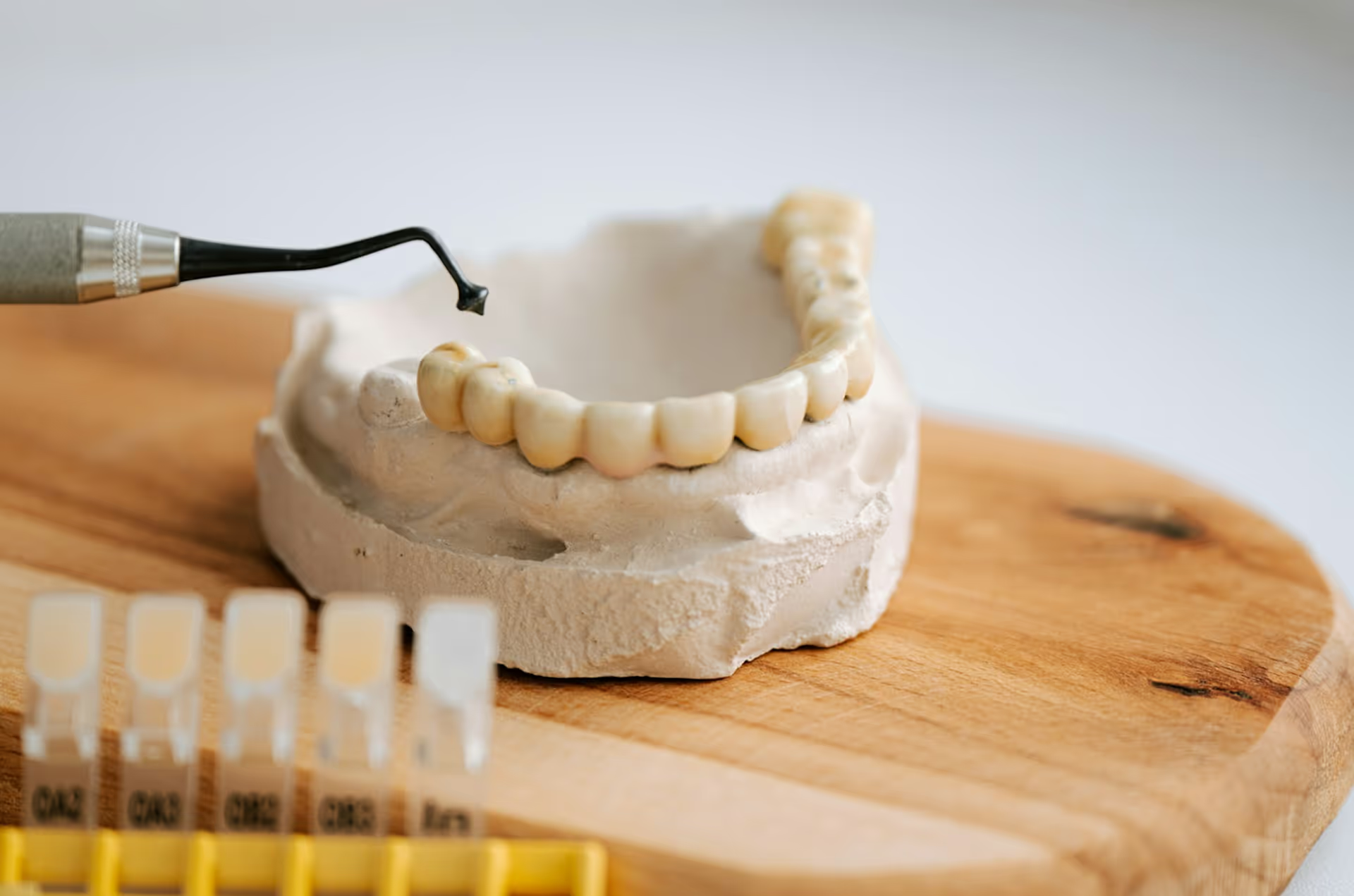

Prosthetics: Function, Reliability, Aesthetics
Functional Prosthetics: More Than Just a Beautiful Smile
Restoring the dental arch is not just about aesthetics, but a vital requirement for the health of the entire body. A full set of teeth ensures the proper distribution of the chewing load, protecting adjacent teeth from overloading and shifting. This balance relieves excess tension in the jaw muscles and prevents premature wear of the temporomandibular joint (TMJ).
Our specialists select solutions — from crowns and bridges to advanced implant systems — based on your individual needs, aesthetic preferences, and budget. We do not simply restore the visible part of the tooth; we also recreate its function. Our goal is to bring back your comfort while eating and confidence in social interaction.
Types of Prosthetics
Modern prosthetic methods allow effective restoration of the dental arch regardless of the complexity of the case. The choice of a specific solution depends on the number of missing teeth, the condition of the bone tissue, and the required functional outcome.
Microprosthetics (veneers and inlays)
Used for restoring the damaged crown portion of the tooth and correcting defects (chips, cracks). This method allows healthy tooth structure to be preserved by restoring only the affected area.
Veneers and lumineers: thin overlays for flawless aesthetics in the smile zone.
Inlays (inlay, onlay): high-precision ceramic restorations. Depending on their size, they restore both small lateral defects and the entire occlusal (chewing) surface of the tooth.
Dental Crowns
A crown is placed on a damaged tooth, fully restoring its anatomical shape and protecting it from further deterioration. It takes over the chewing load while preserving the health of the tooth root.
The process includes gentle preparation of the tooth structure, creation of a highly precise model in a dental laboratory, and secure fixation with a special dental cement. We use modern ceramic materials and zirconium dioxide, which allows us to achieve excellent aesthetics and durability, making the crown indistinguishable from your natural teeth.
Dental Bridges
This is a reliable and more cost-effective way to replace missing teeth without surgical intervention.
Key features: the main requirement is the presence of healthy and stable supporting teeth. The structure is fixed to adjacent teeth, which act as anchors.
Important considerations: placing a bridge requires preparation (shaping) of the neighboring teeth to secure the crowns. It should also be noted that over time, natural bone resorption may occur in the area of the missing tooth due to the absence of direct chewing load.
Implant-Supported Prosthetics
All-on-4 and All-on-6 prosthetics are the modern standard for full tooth loss rehabilitation. The concept involves placing a fixed prosthesis on 4 or 6 dental implants.
This restoration serves as a complete replacement for natural teeth: it is securely fixed, does not shift during chewing, and fully restores facial aesthetics. It is an excellent alternative to removable dentures, providing a significantly improved quality of life.
Removable Prosthetics
Removable dentures are one of the most affordable ways to replace missing teeth without complex surgical procedures. They can be used to restore either individual teeth or a full dental arch.
We select the most suitable option based on your budget and clinical situation: from affordable acrylic and nylon dentures to durable metal-frame (cast partial) dentures and premium combined systems with hidden attachments, ensuring maximum comfort.
Implant-supported overdenture
In cases of complete tooth loss in the lower jaw, special attention is given to implant-supported removable prosthetics using a bar-retained system. Two implants are sufficient to provide a removable denture with excellent stability. This effectively solves the common issue of denture retention in the lower edentulous jaw.
Key Stages of Dental Prosthetics
Diagnostics and Planning
Everything begins with a detailed examination and analysis of diagnostic images. At this stage, we discuss possible prosthetic options and create a personalized treatment plan based on your goals and budget.
Preparation and Modeling
We perform the necessary preparation (treatment or professional dental cleaning) and create a virtual or wax model of your future smile. This allows us to agree in advance on the shape and color of the teeth.
Laboratory Stage
In the dental laboratory, a custom-made restoration is created according to your individual parameters. During the waiting period (if stipulated in the treatment plan), temporary restorations are placed to ensure you do not experience any discomfort.
Fitting and Final Fixation
A crucial stage of quality control: we verify the precision of the fit, bite comfort, and aesthetics. After final adjustments, the restoration is securely fixed, and you receive aftercare instructions to ensure a long-lasting result.
Teeth prosthetics prices
Not sure which prosthetic option to choose?
Book a consultation today. Our specialist will perform an examination, take the necessary scans, and suggest tooth restoration options tailored to your specific goals and budget.